Most walkway projects start with this choice, and most homeowners get talked into one before understanding the trade. Brick and natural stone both last decades in Connecticut when they're installed properly. Neither is objectively better. What separates them is pattern versus irregularity, cost, how they handle underfoot, and how each one sits against the house you already have. There's also a third factor that outranks both, and any honest contractor will tell you the same thing: the base under the path matters more than what goes on top of it. A bluestone walkway on a thin base will go uneven faster than a brick walkway on a properly compacted one. So here's how the two materials actually compare, and the questions worth asking before you decide which one goes in front of your door. Get the order of those questions right and the material choice mostly answers itself, because the house and the setting usually point one way.
The Case for Brick
Brick gives you a uniform pattern. Running bond, herringbone, and basket weave all read as deliberate layouts, and a soldier course border frames the field and holds the edges tight.
It usually costs less than natural stone, both in material and in labor, because the units are consistent and go down faster than stone that has to be cut and fit piece by piece.
It also matches. On a Connecticut home with existing brick on the facade, steps, or chimney, a brick walkway ties the property together in a way stone doesn't. That's the strongest argument for it, and on older brick homes it's usually the deciding one.
The Case for Natural Stone
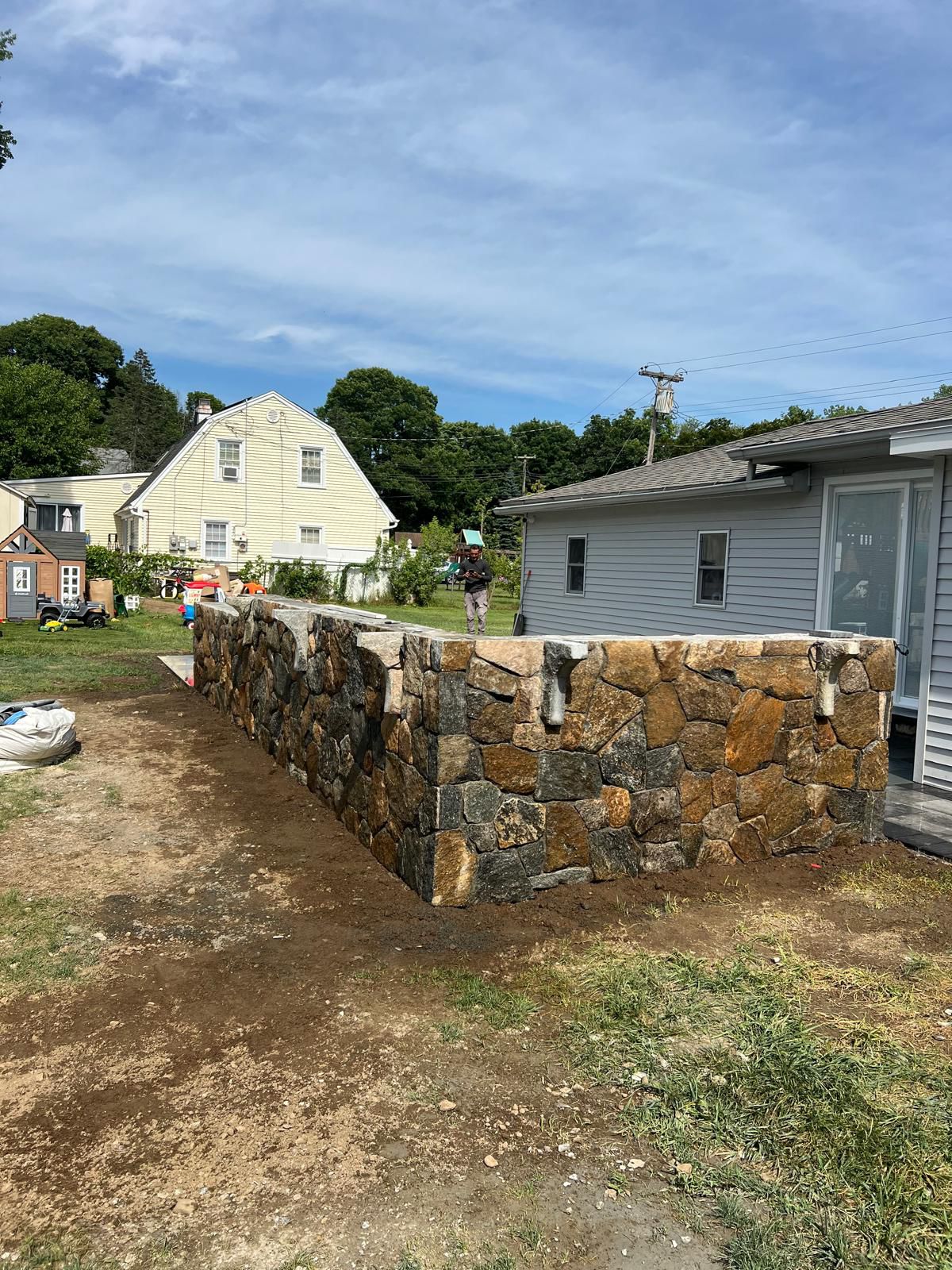
Stone gives you irregularity, and that's the point. Bluestone, fieldstone, and flagstone all read as something that belongs to the property rather than something that was installed on it.
Large format stone also means fewer joints. Fewer joints means fewer places for weeds to establish and less washout at the edges over time.
It costs more, and the labor is genuinely different. Each piece gets cut and fit to the layout, which takes longer than laying units of a known size. On a home with existing stone walls, a stone foundation, or fieldstone anywhere on the property, it's usually worth the difference.
What Matters More Than Either One
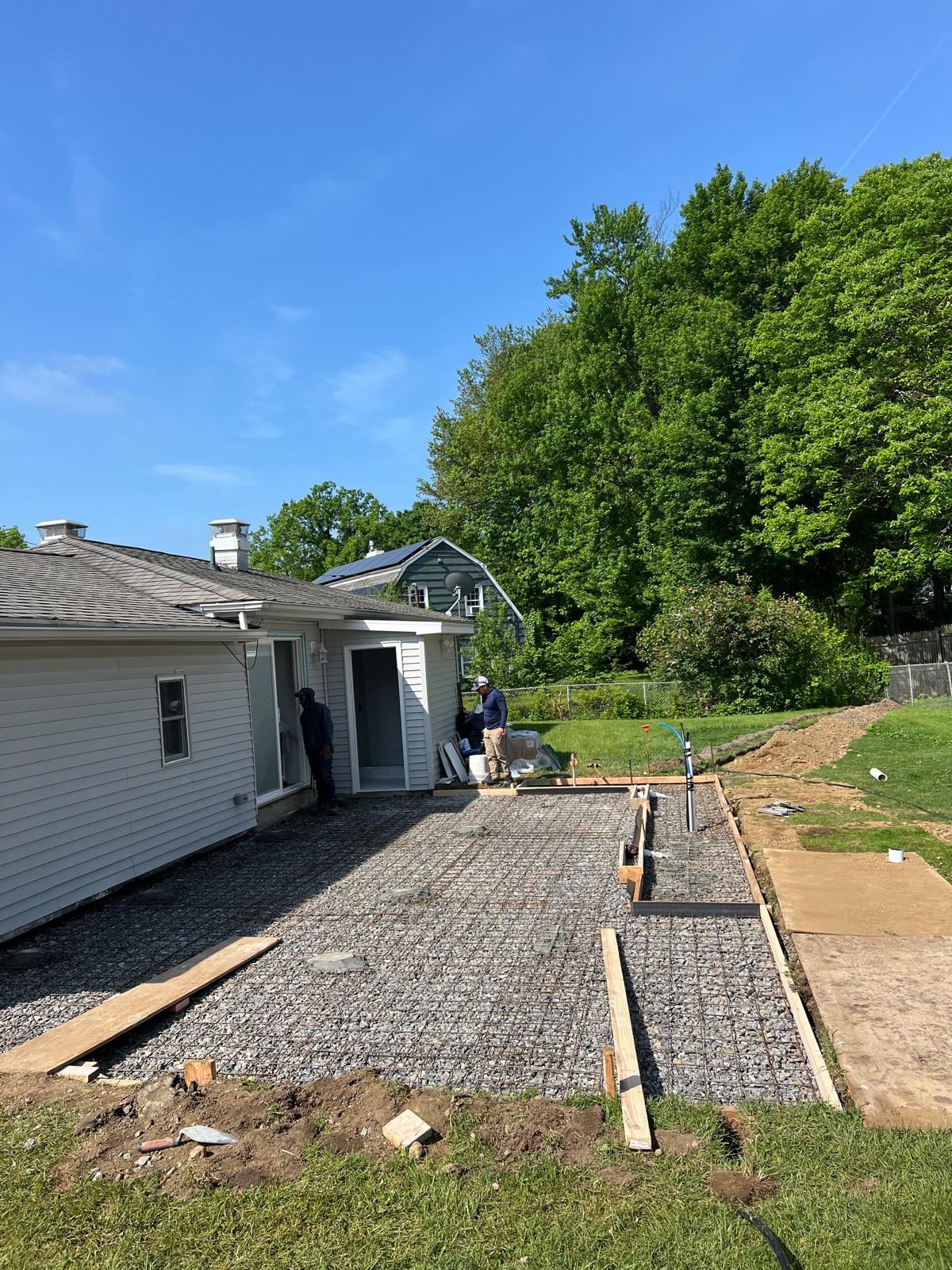
The base. Excavation to the right depth, a compacted processed stone base, and a screeded setting bed do more for how a walkway ages than the surface material ever will.
Frost heave is why. Water held in a thin or poorly drained base freezes, lifts sections, and they don't settle back level. That's the uneven walkway everyone has seen, and it happens to brick and stone equally.
So when you're comparing two quotes, the question isn't just which material. It's how deep they're excavating and what goes under the path. A cheaper quote on the same material usually means less of both, and you find out which in about three winters.
How to Decide
Start with the house. If there's brick on the facade, the steps, or the chimney, brick usually wins on coherence. If there's stone anywhere on the property, stone usually does.
Then look at the setting. A formal front entry suits brick's regularity. A path winding through planting or into a wooded lot suits stone's irregularity.
Then check the budget honestly, and remember what the money should go toward. If the choice is between stone on a minimal base and brick on a proper one, take the brick. The material you see is a look. The base you don't see is whether the walkway is still flat in ten years.
Back to Blog