Masonry has a season, and in Connecticut it's shorter than people think. This isn't a scheduling preference. Mortar is a chemical reaction, and that reaction needs temperature to happen properly. Pour it into a joint below freezing and the water in the mix freezes before the mortar cures, which leaves you with a joint that looks fine and has almost no strength. It fails the following year and takes brick with it. The same logic applies to anything with a base under it. Walkways, retaining walls, and driveways all need ground that can be excavated and compacted, and frozen ground does neither. So the practical answer to when masonry work should happen in Connecticut runs roughly from spring thaw through late fall. Here's how each part of that window actually behaves, what the temperature rule really means in practice, and what is still worth doing in the months when nothing can be built outside.
Why Temperature Decides Everything
Mortar cures through hydration. Water in the mix reacts with cement over days, and that reaction slows as temperature drops and effectively stops near freezing.
A joint that freezes before it cures is the worst outcome, because the damage is invisible. The mortar looks set. It has almost no bond, and it starts crumbling the following winter.
The general working rule is to keep masonry above freezing for the first days after it goes in, including overnight. In Connecticut that rules out most of December through February for anything involving fresh mortar, and it makes late November and early March unreliable rather than impossible.
Spring: Good, With One Catch
Once the ground thaws, spring opens everything back up. Excavation becomes possible again, and temperatures hold well enough through the day for mortar to cure.
The catch is that spring is when the previous winter's damage becomes visible, so it's also when everyone calls. Crowns that cracked in January, walls that heaved, and joints that opened all show up in March and April at once.
If you already know a repair is coming, getting on a schedule early in the season is worth doing. Waiting until you see the damage usually means waiting behind everyone else who saw theirs at the same time.
Summer and Fall: The Working Window
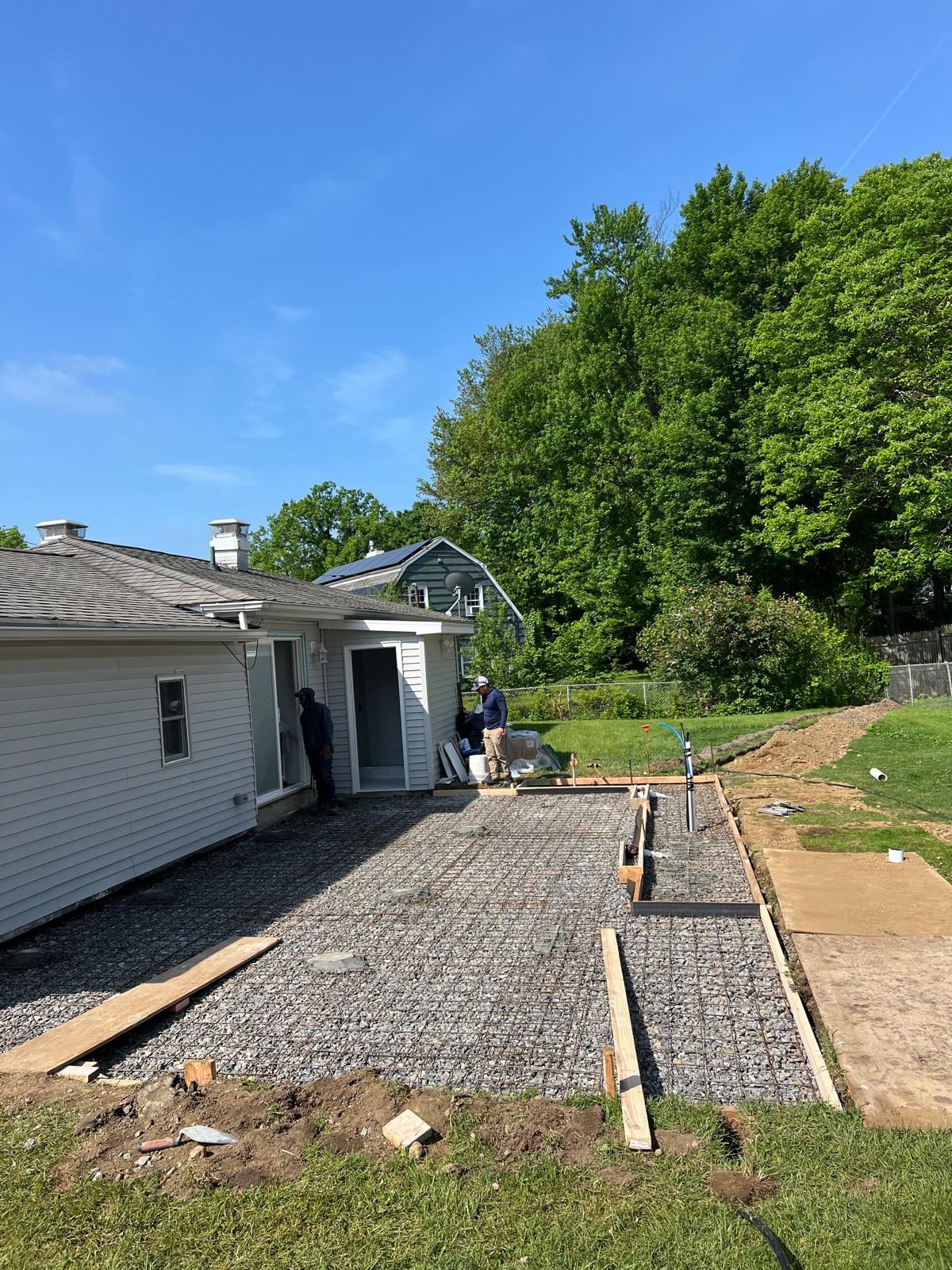
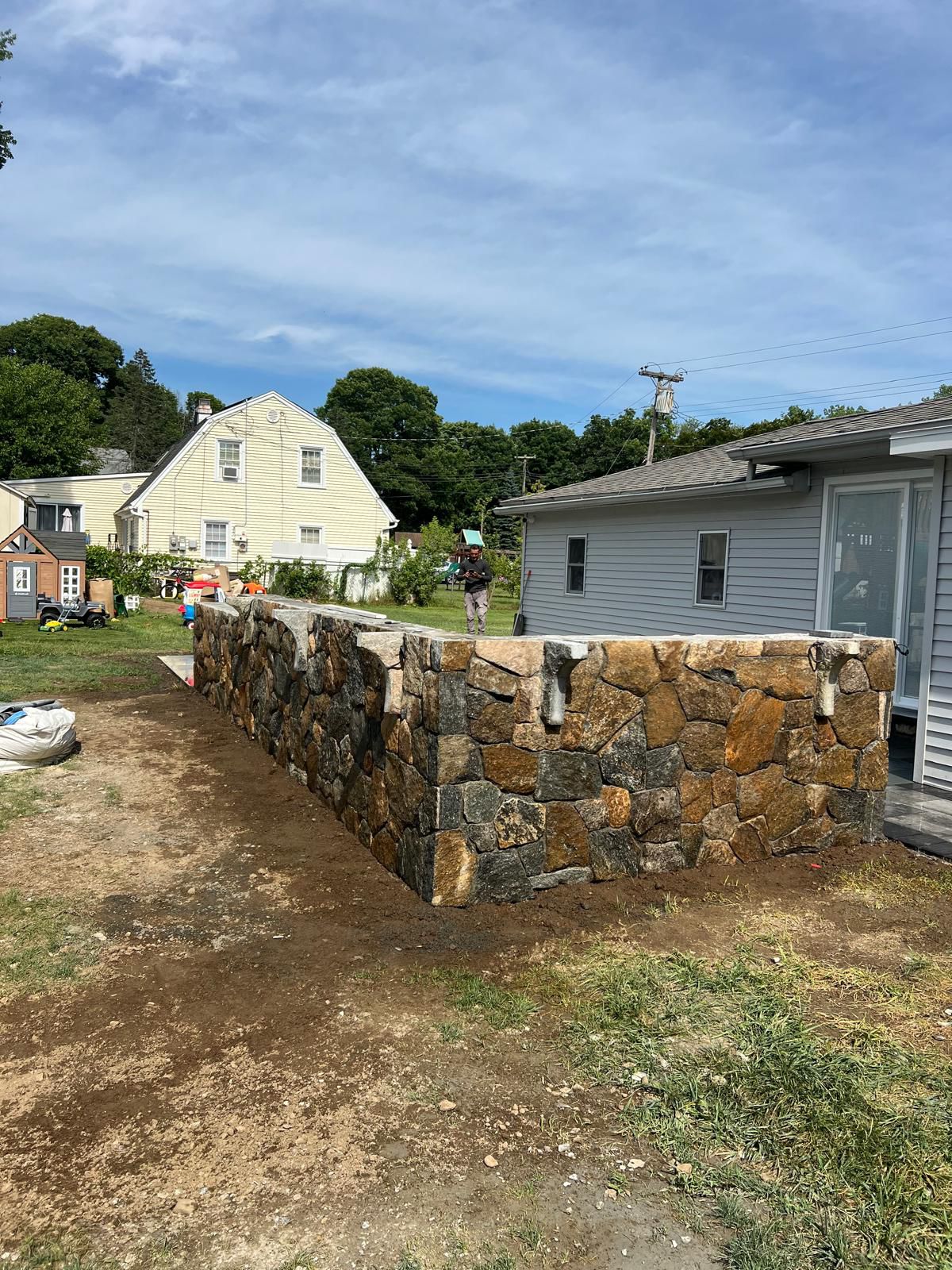
Summer is the most reliable stretch. Long days, warm nights, and workable ground mean almost anything can be done, from full rebuilds to new walkways and driveways.
Very hot weather has its own issue. Mortar can dry too fast in direct sun, which weakens it, so work gets managed with shade, damp cure, or earlier starts on the hottest days.
Fall is the window most homeowners underuse. Temperatures are steady, the ground is still workable, and anything closed up before winter stops taking freeze and thaw damage for another season. Repointing, crown work, and joint repairs are all better done in October than in April.
What Can Still Happen in Winter
Not everything stops. Assessment, estimates, and planning all happen year round, and getting a written scope in January means being first on the schedule in March rather than tenth.
Some interior work continues as well. A firebox rebuild inside a heated house isn't subject to the same limits as exterior joints on a chimney.
What doesn't happen is exterior mortar work in a hard freeze, or excavation in frozen ground. Any mason willing to set block on frozen soil in January is telling you something about how the rest of the job will go, and it's worth listening to. That one answer tells you more about a contractor than a portfolio does.
Back to Blog